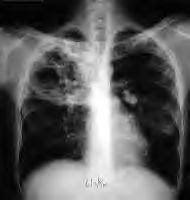
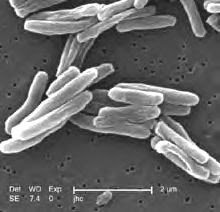
In Dallas County, there's a disease so dreaded that people diagnosed with it must agree to take medication for six months and allow a government worker to watch them swallow the pills every day.
The number of TB cases in the county fell below 200 for the first time last year. It is so serious that the medication is hand-delivered wherever an infected person can be found, even if it's in a cardboard box under a downtown bridge.
"We can meet them at a McDonald's or a 7-Eleven or a gas station," said Tesfa Kidane of Dallas County Health and Human Services.
He oversees the 10 outreach workers who religiously keep track of and treat Dallas County's nearly 200 tuberculosis patients – an approach so successful that TB cases dropped 11 percent in 2009 from the previous year.
Why such a hard-nosed approach for a disease that has nearly been stamped out in the U.S. and is highly treatable?
"This disease, if left untreated and unchecked, could decimate a community," said Dr. Garry Woo, medical director of tuberculosis control for Dallas County.
And if patients refuse to take their meds or miss too many of these rendezvous, county health officials will have them quarantined.
http://www.dallasnews.com/sharedcontent/dws/news/localnews/stories/DN-tuberculosis_15met.ART0.State.Edition2.4cd92e0.html
Showing posts with label DOTS. Show all posts
Showing posts with label DOTS. Show all posts
Saturday, 17 April 2010


Thursday, 8 April 2010
India's Tuberculosis Program Provides Hope to Millions
April 7, 2010
India has one of the most severe burdens of tuberculosis in the world, accounting for one-fifth of the global incidence. TB is India's leading cause of adult illness and death from a communicable disease. Most of those infected are 15- to 59-year-old adults, the most economically productive segment of society.
In 1993, the Indian Government began to treat tuberculosis patients with the World Health Organization-recommended Directly Observed Treatment Short-course (DOTS). Left on their own, many TB patients fail to take the entire regimen of medication, contributing to the spread of drug-resistant TB for which treatment is long, difficult and expensive. Under DOTS, healthcare workers observe patients as they take their medicine.
More than one billion people covered by DOTS Strategy
In 1997 the Government formally launched the DOTS strategy nationwide. The first World Bank credit (1997- 2005) allowed rapid expansion of the DOTS strategy throughout the country. By providing free diagnostic and treatment services through public or non-public institutions, the project ensured the availability of TB diagnosis and treatment to all citizens regardless of their economic status. Full nationwide coverage of the DOTS strategy was achieved in March 2006, covering over one billion people.
"In the earlier TB control program, patients were good with collecting medicines, but we could not ensure that they took them. Now these medicines are administered at the clinic and its several satellite centers, thus ensuring that patients actually do take their medicines," said Dr. Ravinder Verma, Medical Officer In-charge, at a government Chest Clinic and HIV Center in New Delhi.
Detection and cure rates increased dramatically
The results have been dramatic. Diagnosis is far more accurate. While x-rays were used to detect the disease earlier, the sputum analysis test has increased detection levels from 30% to 70% at the national level, achieving global targets. Between 1997 and 2008, more than 9.5 million people suffering from TB were diagnosed and placed on treatment, thus saving more than 1.7 million additional lives.
Cure rates for those placed on treatment have also increased dramatically - tripling from 25% in 1997 to 86% in 2009, exceeding the global target. As a result, deaths from the disease were cut sevenfold - from 29% in 1997 to 4% in 2008.
Another key reason for the success is that the entire DOTS program is decentralized. Diagnosis done in the villages rather than in district hospitals. Quality-assured diagnostic facilities are available through more than 12,000 microscopy centers.
Moreover, more than 300,000 local health workers or trained community volunteers ensure that patients adhere to their drug regimen. Associations of medical professionals are promoting international standards for TB care. Also participating are over 250 medical colleges and some 2,500 NGOs.
http://www.reliefweb.int/rw/rwb.nsf/db900SID/SMAR-84A9DH?OpenDocument
India has one of the most severe burdens of tuberculosis in the world, accounting for one-fifth of the global incidence. TB is India's leading cause of adult illness and death from a communicable disease. Most of those infected are 15- to 59-year-old adults, the most economically productive segment of society.
In 1993, the Indian Government began to treat tuberculosis patients with the World Health Organization-recommended Directly Observed Treatment Short-course (DOTS). Left on their own, many TB patients fail to take the entire regimen of medication, contributing to the spread of drug-resistant TB for which treatment is long, difficult and expensive. Under DOTS, healthcare workers observe patients as they take their medicine.
More than one billion people covered by DOTS Strategy
In 1997 the Government formally launched the DOTS strategy nationwide. The first World Bank credit (1997- 2005) allowed rapid expansion of the DOTS strategy throughout the country. By providing free diagnostic and treatment services through public or non-public institutions, the project ensured the availability of TB diagnosis and treatment to all citizens regardless of their economic status. Full nationwide coverage of the DOTS strategy was achieved in March 2006, covering over one billion people.
"In the earlier TB control program, patients were good with collecting medicines, but we could not ensure that they took them. Now these medicines are administered at the clinic and its several satellite centers, thus ensuring that patients actually do take their medicines," said Dr. Ravinder Verma, Medical Officer In-charge, at a government Chest Clinic and HIV Center in New Delhi.
Detection and cure rates increased dramatically
The results have been dramatic. Diagnosis is far more accurate. While x-rays were used to detect the disease earlier, the sputum analysis test has increased detection levels from 30% to 70% at the national level, achieving global targets. Between 1997 and 2008, more than 9.5 million people suffering from TB were diagnosed and placed on treatment, thus saving more than 1.7 million additional lives.
Cure rates for those placed on treatment have also increased dramatically - tripling from 25% in 1997 to 86% in 2009, exceeding the global target. As a result, deaths from the disease were cut sevenfold - from 29% in 1997 to 4% in 2008.
Another key reason for the success is that the entire DOTS program is decentralized. Diagnosis done in the villages rather than in district hospitals. Quality-assured diagnostic facilities are available through more than 12,000 microscopy centers.
Moreover, more than 300,000 local health workers or trained community volunteers ensure that patients adhere to their drug regimen. Associations of medical professionals are promoting international standards for TB care. Also participating are over 250 medical colleges and some 2,500 NGOs.
http://www.reliefweb.int/rw/rwb.nsf/db900SID/SMAR-84A9DH?OpenDocument
Subscribe to:
Posts (Atom)