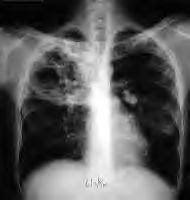
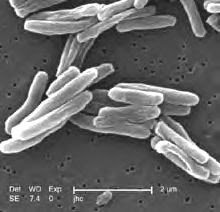
Tuberculosis (TB) remains a public health threat in the United States, with as many as 14 million Americans infected with the bacteria. At any given time, members from this large pool of infected people can develop full-blown, highly contagious forms of the disease.
According to the World Health Organization, about one person dies of TB every 17 seconds, causing nearly 2 million deaths annually. The disease continues to be a contagious scourge in developing countries, and with the world shrinking rapidly due to global migration, it is a major public health threat in developed nations as well, including the United States. Each infected person represents a potential yet preventable future outbreak, WHO says. Testing for TB infection is necessary in order to quickly identify the appropriate persons for treatment and thereby prevent its spread.
New data from a meta-analysis of existing literature published this week in CHEST, the official journal of the American College of Chest Physicians, provide evidence supporting a new, scientifically-proven standard for detecting TB infection. The study demonstrates that Interferon Gamma Release Assays (IGRAs) are superior to the previous standard in diagnostics, the 100+-year-old tuberculin skin test (TST), for detecting confirmed active TB disease. This was especially true when the IGRAs -- both QuantiFERON®-TB Gold (QFT) and T-SPOT®-TB (T-Spot) -- were administered in developed countries.
http://ohsonline.com/articles/2010/04/08/more-accurate-way-to-diagnose-tb.aspx?admgarea=news
Showing posts with label Statistics US. Show all posts
Showing posts with label Statistics US. Show all posts
Saturday, 10 April 2010


Tuesday, 11 December 2007
US statistics
Arch Intern Med. 2007;167(22):2443-2452.
Trends in Tuberculosis/Human Immunodeficiency Virus Comorbidity, United States, 1993-2004
Rachel Albalak, PhD; Richard J. O’Brien, MD; et al.
Background To our knowledge, this is the first assessment of trends in tuberculosis (TB)/human immunodeficiency virus (HIV) comorbidity in the United States based on national TB surveillance data.
Methods We analyzed all incident TB cases reported to the Centers for Disease Control and Prevention national TB surveillance system from all 50 states and the District of Columbia from 1993 through 2004. Trends in TB/HIV cases were examined according to selected demographic and clinical characteristics.
Results Cases of TB/HIV decreased from 3681 (15% of 25 108 TB cases) in 1993 to 1187 (8% of 14 515 TB cases) in 2004, accounting for 23% of the overall decrease in TB cases during this period. The TB/HIV case rate decreased from 1.4/100 000 in 1993 to 0.4/100 000 in 2004. The highest TB/HIV comorbidity rates persisted in persons aged 25 to 44 years (13.8%), males (9.7%), US-born persons (10.7%), non-Hispanic blacks (17.8%), and persons from the Northeast (11.0%) and the South (10.1%). Propensity stratification, used to account for the unequal probability of patients with TB being tested for HIV during the study period, did not show important differences in TB/HIV comorbidity trends.
Conclusions Comorbidity due to TB/HIV decreased substantially between 1993 and 2004, primarily in US-born persons in states that experienced a TB resurgence between 1985 and 1992. These decreases coincide with improvements in TB control and advances in HIV treatment and diagnosis. The overall decreases obscure the wide variation in comorbidity that exists among some demographic groups and the recent slowing in the decline over the past 3 years.
Trends in Tuberculosis/Human Immunodeficiency Virus Comorbidity, United States, 1993-2004
Rachel Albalak, PhD; Richard J. O’Brien, MD; et al.
Background To our knowledge, this is the first assessment of trends in tuberculosis (TB)/human immunodeficiency virus (HIV) comorbidity in the United States based on national TB surveillance data.
Methods We analyzed all incident TB cases reported to the Centers for Disease Control and Prevention national TB surveillance system from all 50 states and the District of Columbia from 1993 through 2004. Trends in TB/HIV cases were examined according to selected demographic and clinical characteristics.
Results Cases of TB/HIV decreased from 3681 (15% of 25 108 TB cases) in 1993 to 1187 (8% of 14 515 TB cases) in 2004, accounting for 23% of the overall decrease in TB cases during this period. The TB/HIV case rate decreased from 1.4/100 000 in 1993 to 0.4/100 000 in 2004. The highest TB/HIV comorbidity rates persisted in persons aged 25 to 44 years (13.8%), males (9.7%), US-born persons (10.7%), non-Hispanic blacks (17.8%), and persons from the Northeast (11.0%) and the South (10.1%). Propensity stratification, used to account for the unequal probability of patients with TB being tested for HIV during the study period, did not show important differences in TB/HIV comorbidity trends.
Conclusions Comorbidity due to TB/HIV decreased substantially between 1993 and 2004, primarily in US-born persons in states that experienced a TB resurgence between 1985 and 1992. These decreases coincide with improvements in TB control and advances in HIV treatment and diagnosis. The overall decreases obscure the wide variation in comorbidity that exists among some demographic groups and the recent slowing in the decline over the past 3 years.
Subscribe to:
Posts (Atom)