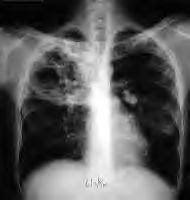
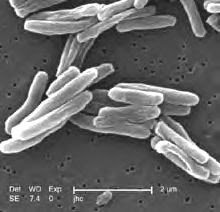
The end of vaccinations for tuberculosis did not bring about an increase in cases of actual tuberculosis among children. The disease still exists in Africa and Russia, and many immigrant children are still vaccinated in Finland. Terhi Kilpi of the National Institute for Health and Welfare emphasises, however, that immigration does not pose an additional risk for tuberculosis among Finns.
“This has been seen very well in Sweden. Tuberculosis among the population has become increasingly rare, even though the country has taken in immigrants for decades. It should also be noted that young children with tuberculosis do not infect others,” Kilpi explains.
Finland stopped routinely vaccinating children against tuberculosis in 2006 because it was found to cause more harm than good, with bone infections as a possible side effect
http://www.yle.fi/uutiset/news/2010/04/giving_up_tb_vaccinations_increases_lymph_node_infections_1615205.html
Showing posts with label Vaccine. Show all posts
Showing posts with label Vaccine. Show all posts
Tuesday, 20 April 2010


Thursday, 28 August 2008
VACCINE AGAINST TB
http://www.bizjournals.com/seattle/stories/2008/08/25/daily19.html?ana=from_rss
The Infectious Disease Research Institute (IDRI) said it’s been awarded a $6.3 million federal grant to study a new tuberculosis vaccine.The four-year grant is from the National Institute of Allergy and Infectious Diseases, part of the National Institutes of Health. Tuberculosis vaccines haven’t changed much in many years, according to researchers at the Seattle nonprofit.“The currently available vaccine, Bacillus Calmette-Guerin (BCG), was developed in 1921 and fails to protect most people beyond childhood,” said Rhea Coler of IDRI, said in a statement.IDRI is focusing on the making of adjuvants — an essential ingredient in several vaccines — that it believes can target specific immune pathways and improve vaccine protection
The Infectious Disease Research Institute (IDRI) said it’s been awarded a $6.3 million federal grant to study a new tuberculosis vaccine.The four-year grant is from the National Institute of Allergy and Infectious Diseases, part of the National Institutes of Health. Tuberculosis vaccines haven’t changed much in many years, according to researchers at the Seattle nonprofit.“The currently available vaccine, Bacillus Calmette-Guerin (BCG), was developed in 1921 and fails to protect most people beyond childhood,” said Rhea Coler of IDRI, said in a statement.IDRI is focusing on the making of adjuvants — an essential ingredient in several vaccines — that it believes can target specific immune pathways and improve vaccine protection
Subscribe to:
Posts (Atom)