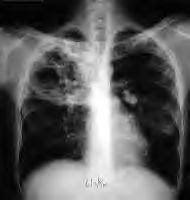
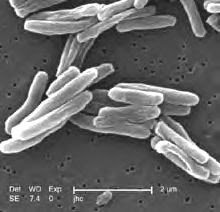
Treatment with isoniazid preventive therapy does not lead to the development of drug-resistant tuberculosis, South African investigators report in the April 24th edition of AIDS. Drug susceptibility was monitored in gold miners who developed active tuberculosis (TB). Results showed that patients who received isoniazid preventive therapy did not have an increased risk of developing TB which was resistant to the drug. Isoniazid preventive therapy has been shown to halve the risk of developing TB in people with HIV.
http://www.aidsmap.com/en/news/2507DD8E-9DF4-4101-ABF7-E8E701614A9A.asp
Showing posts with label HIV. Show all posts
Showing posts with label HIV. Show all posts
Saturday, 17 April 2010


Genome mapping of Mycobacterium
At a conference on Sunday, the Government's Open Source Drug Discovery (OSDD) initiative released the findings of its 'Connect 2 Decode' (C2D) project to re-annotate the biological and genetic data concerning the Mycobacterium tuberculosis (Mtb) genome.
This is the first time that a complete mapping of the Mtb genome has been accumulated, confirmed and made available publicly. C2D's results might include significant information to release previously unnoticed aspects of tuberculosis (TB); consequential in development opportunities for immediately required new TB drugs in India and other developing nations.
The World Health Organization (WHO) states that every year, 1.7 million people die from TB and that in some parts of the globe, one in four people with TB has a form of the disease, which can no longer be cured with ordinary drugs procedures. In spite of this public health emergency, TB research endowment, principally for new drugs, remains alarmingly insufficient.
Dr. Samir K. Brahmachari, Scientist and Director-General of the Council of Scientific and Industrial Research (CSIR), said, "We need to have a balanced view between health as a right and health as a business. It is because there has been imbalance in this view that diseases like TB, with high mortality but low profitability, are neglected by the current system of pharmaceutical research".
Loon Gangte of the Delhi Network of Positive People, a support group for people living with HIV/AIDS, said that the irony is that with the accessibility of medications for HIV and principally of safe and reasonable Indian standards, people are living with HIV but dying of TB.
http://topnews.us/content/216413-findings-c2d-project
This is the first time that a complete mapping of the Mtb genome has been accumulated, confirmed and made available publicly. C2D's results might include significant information to release previously unnoticed aspects of tuberculosis (TB); consequential in development opportunities for immediately required new TB drugs in India and other developing nations.
The World Health Organization (WHO) states that every year, 1.7 million people die from TB and that in some parts of the globe, one in four people with TB has a form of the disease, which can no longer be cured with ordinary drugs procedures. In spite of this public health emergency, TB research endowment, principally for new drugs, remains alarmingly insufficient.
Dr. Samir K. Brahmachari, Scientist and Director-General of the Council of Scientific and Industrial Research (CSIR), said, "We need to have a balanced view between health as a right and health as a business. It is because there has been imbalance in this view that diseases like TB, with high mortality but low profitability, are neglected by the current system of pharmaceutical research".
Loon Gangte of the Delhi Network of Positive People, a support group for people living with HIV/AIDS, said that the irony is that with the accessibility of medications for HIV and principally of safe and reasonable Indian standards, people are living with HIV but dying of TB.
http://topnews.us/content/216413-findings-c2d-project
Tuesday, 11 December 2007
US statistics
Arch Intern Med. 2007;167(22):2443-2452.
Trends in Tuberculosis/Human Immunodeficiency Virus Comorbidity, United States, 1993-2004
Rachel Albalak, PhD; Richard J. O’Brien, MD; et al.
Background To our knowledge, this is the first assessment of trends in tuberculosis (TB)/human immunodeficiency virus (HIV) comorbidity in the United States based on national TB surveillance data.
Methods We analyzed all incident TB cases reported to the Centers for Disease Control and Prevention national TB surveillance system from all 50 states and the District of Columbia from 1993 through 2004. Trends in TB/HIV cases were examined according to selected demographic and clinical characteristics.
Results Cases of TB/HIV decreased from 3681 (15% of 25 108 TB cases) in 1993 to 1187 (8% of 14 515 TB cases) in 2004, accounting for 23% of the overall decrease in TB cases during this period. The TB/HIV case rate decreased from 1.4/100 000 in 1993 to 0.4/100 000 in 2004. The highest TB/HIV comorbidity rates persisted in persons aged 25 to 44 years (13.8%), males (9.7%), US-born persons (10.7%), non-Hispanic blacks (17.8%), and persons from the Northeast (11.0%) and the South (10.1%). Propensity stratification, used to account for the unequal probability of patients with TB being tested for HIV during the study period, did not show important differences in TB/HIV comorbidity trends.
Conclusions Comorbidity due to TB/HIV decreased substantially between 1993 and 2004, primarily in US-born persons in states that experienced a TB resurgence between 1985 and 1992. These decreases coincide with improvements in TB control and advances in HIV treatment and diagnosis. The overall decreases obscure the wide variation in comorbidity that exists among some demographic groups and the recent slowing in the decline over the past 3 years.
Trends in Tuberculosis/Human Immunodeficiency Virus Comorbidity, United States, 1993-2004
Rachel Albalak, PhD; Richard J. O’Brien, MD; et al.
Background To our knowledge, this is the first assessment of trends in tuberculosis (TB)/human immunodeficiency virus (HIV) comorbidity in the United States based on national TB surveillance data.
Methods We analyzed all incident TB cases reported to the Centers for Disease Control and Prevention national TB surveillance system from all 50 states and the District of Columbia from 1993 through 2004. Trends in TB/HIV cases were examined according to selected demographic and clinical characteristics.
Results Cases of TB/HIV decreased from 3681 (15% of 25 108 TB cases) in 1993 to 1187 (8% of 14 515 TB cases) in 2004, accounting for 23% of the overall decrease in TB cases during this period. The TB/HIV case rate decreased from 1.4/100 000 in 1993 to 0.4/100 000 in 2004. The highest TB/HIV comorbidity rates persisted in persons aged 25 to 44 years (13.8%), males (9.7%), US-born persons (10.7%), non-Hispanic blacks (17.8%), and persons from the Northeast (11.0%) and the South (10.1%). Propensity stratification, used to account for the unequal probability of patients with TB being tested for HIV during the study period, did not show important differences in TB/HIV comorbidity trends.
Conclusions Comorbidity due to TB/HIV decreased substantially between 1993 and 2004, primarily in US-born persons in states that experienced a TB resurgence between 1985 and 1992. These decreases coincide with improvements in TB control and advances in HIV treatment and diagnosis. The overall decreases obscure the wide variation in comorbidity that exists among some demographic groups and the recent slowing in the decline over the past 3 years.
Subscribe to:
Posts (Atom)