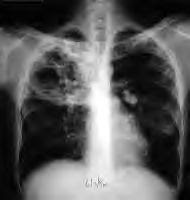
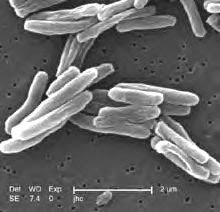
Active case finding is to find, diagnose, and treat and follow up tuberculosis patients in the local communities.
To find out the efficacy of community-based case finding, we did a community randomized trial and cost-effectiveness analysis in south Ethiopia. The trial Ethiopia aimed to evaluate if community health workers could improved smear-positive case detection and treatment success rates (Datiko and Lindtjørn, 2009 and Datiko and Lindtjørn, 2010).
The study showed that involving of health extension workers (HEWs) in sputum collection and treatment improved smear-positive case detection and treatment success rate, possibly because of an improved service access. This finding has policy implications and could be applied in settings with low health service coverage and a shortage of health workers.
Recently, National TB Control Programme in Ethiopia started to decentralize case finding and treatment to local communities (in Ethiopia called kebeles) using community based-treatment by health extension workers.
http://bernt.b.uib.no/2010/04/16/active-case-fining-to-improve-tuberculosis-control/
Showing posts with label Ethiopia. Show all posts
Showing posts with label Ethiopia. Show all posts
Saturday, 17 April 2010


Ethiopia: Afar pastoralists knowledge of tbc
Afar pastoralists live in the northeast of Ethiopia, confined to the most arid part of the country, where there is least access to educational, health and other social services. Tuberculosis (TB) is one of the major public health problems in Afar region.Lack of knowledge about TB could affect the health-seeking behaviour of patients and sustain the transmission of the disease within the community. In this study, we assessed the knowledge and perception of apparently healthy individuals about pulmonary tuberculosis (PTB) in pastoral communities of Afar.Methods: Between March and May 2009, a community-based cross-sectional questionnaire survey involving 818 randomly selected healthy individuals was conducted in pastoral communities of Afar region.Moreover, two focus group discussions (FGDs), one with men and one with women, were conducted in each of the study area to supplement the quantitative study.Results: The majority (95.6%) of the interviewees reported that they have heard about PTB (known locally as "Labadore"). However, the participants associated the cause of PTB with exposure to cold air (45.9%), starvation (38%), dust (21.8%) or smoking/chewing Khat (Catha edulis) (16.4%
Subscribe to:
Posts (Atom)